Avani Mooloolaba – Residential Survey
Application under the Liquor Act 1992
Residential Standard Survey for Community Impact Statement
Easter and ANZAC Day Trading Hours 2026
Good Friday – 3 April 2026
Trading hours and conditions for all licensed premises in Queensland are set out below.
Thursday Night (Good Friday Eve): all premises must cease service at 12 midnight. The 30 minute grace period for consumption of drinks on the premises still applies.
Good Friday up to Midnight: if you do not normally serve meals on the premises, you will be able to enjoy a day off.
Premises offering a meals service may open at the usual time on Good Friday, but liquor may only be sold in association with a meal prepared on the premises and served in a part of the premises ordinarily set aside for dining.
Adult entertainment is not permitted on any licensed premises in the 24 hour period from midnight to midnight on Good Friday.
Midnight on Good Friday onwards: normal trading resumes. Premises with extended trading hours approval may open at midnight and trade under their normal conditions until the approved closing time.
Normal trading hours and conditions apply for the remainder of the Easter period.
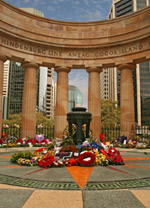
ANZAC Day – 25 April 2026
All licensed premises must cease liquor service at 12 midnight on 24 April, with the usual 30 minute grace period. Gaming must also cease at midnight.
Up to 1 pm on ANZAC day liquor may be sold in association with a meal, prepared on the premises and served in a part of the premises ordinarily set aside for dining. No takeaway liquor may be sold before 1 pm on ANZAC day.
RSL clubs and licensed premises catering for ANZAC day services or RSL functions can commence trading from 5 am on ANZAC day, subject to certain conditions. Please see the OLGR Factsheet for full details.
If your require a temporary extended hours permit for Anzac Day you must lodge the application at least 21 days in advance, which means by close of business on 4 April 2024, the Thursday after Easter. You can make an application through the OLGR Client Portal, or by completing an application form and sending it to OLGR.
OLGR’s Liquor Compliance Strategy

Being investigated by the Office of Liquor and Gaming Regulation (OLGR) for a breach of the Liquor Act 1992 (Qld) (the Act) can be a stressful and costly exercise for licensees. At times, OLGR may choose to prosecute breaches of the Act in Court, even for first time offenders. If convicted, licensees face the prospect of fines in the sum of tens of thousands of dollars and a possible licence fee uplift.
Accordingly, it is essential that licensees know their options, including the ways in which OLGR might be persuaded to deal with breaches of the Act without going to Court. In particular, there are many offences which can be dealt with by way of penalty infringement notice (a ticket).
Licensees should be aware of OLGR’s Liquor Compliance Strategy (LCS), which articulates its policy with respect to investigating and prosecuting breaches of the Act.
In doing so, it seeks to:
- Strive ‘for voluntary compliance with legislation through education and advice, clear expectations and the promotion of “best practice” management but, when required, will initiate high-end enforcement action’;
- ‘Regulate the liquor industry through best practice’;
- Minimise ‘harm without unnecessarily restricting productivity and the economic growth of the liquor industry…’; and,
- ‘[work] with licensees to assist them in meeting the objectives of the Liquor Act, and in particular, promoting the responsible service of alcohol’.
The LCS provides a tiered ‘escalation model’ for compliance and enforcement. From least to most serious, the LCS’ escalation model of compliance is as follows:
- Advice and education;
- Advisory letter;
- Warning letter;
- Infringement;
- Orders;
- Prosecution; and,
- Disciplinary action.
In determining the appropriate tier of compliance or enforcement to take, OLGR will have regard to the seriousness of the alleged offence and impact, intent, the non-compliance history of the licensee and public interest and efficiency considerations.
If you are a licensee who is being investigated for, or charged with a breach of the Act, you may wish to invite OLGR to consider whether an alternative to ‘high end enforcement action’ is on the cards, having regard to the factors OLGR must consider in the LCS. In particular, there are many offences in the Act which can be dealt with by OLGR issuing a ticket instead of going to Court.
Knowing your options can save time, money and the stress of the Court process.
Download OLGR’s Liquor Compliance Strategy
About the Author
Daniel J Barker is a barrister who has been involved in liquor licensing for nearly a decade. As a solicitor, Dan represented numerous licensees investigated for and charged with breaches of the Act. Nowadays, Dan has a broad practice at the Private Bar, with a particular interest in criminal defence, regulatory prosecutions and personal injuries.
This article provides general information only and is not intended to be legal advice. If you are approached by OLGR regarding a breach of the Act, you should seek professional advice before deciding on a course of action.
Responsible Gaming Inititiatives
Gambling Harm Awareness Week (GHAW)
 The annual GHAW (formerly Responsible Gambling Awareness Week) will begin on 18 July 2022. Licensees in the Brisbane area are invited to the launch at Kedron Wavell Services Club from 9.30am on Monday 18 July. This is a free event and you can register your attendance using this form.
More information about GHAW, including promotional material and free printed resources in multiple languages, is available from the OLGR website.
Free Gaming Training
Licensees must engage in responsible gaming strategies and the Commissioner for Liquor & Gaming has made it clear that gaming compliance is a focus of OLGR. Many gaming licences contain specific conditions regarding training, but even if your licence does not include such a condition ongoing responsible gaming training and your relationship with gambling support organisations will be assessed as part of the gaming audits regularly conducted by OLGR. With this in mind, we recommend all licensees consider taking advantage of free training provided by Relationships Australia Queensland to help licensees and employees identify people with a poor relationship to gambling. Topics covered in this training include:
- Gambling Help Service – What it Is and How it Can Help.
- Identifying Behaviours and Signs of Problem Gambling
- Increased Risk for Gambling Venue Staff – Risks and Protective Factors
- How to Help the Family Members and Support Persons of a Problem Gambler
- Available Resources to Assist Staff.
The training is aimed at venue staff, management and board members and is at the following locations:
- 27 July – Jindalee Tavern
- 1 August – Wynnum Manly Leagues Club
- 16 August – Carina Leagues Club
- 23 August – QHA House, Level 2/160 Edward Street, Brisbane
Each session is 90 minutes long, multiple staff from each venue can attend, and all attendees will receive a certificate of completion.
Register your attendance using this form.
If you are not in the Brisbane region and would like more information about training in your area, please contact our office.
- 1
- 2
- 3
- …
- 18
- Next Page »


